Becoming a US citizen by investment remains a compelling goal for many aspiring global investors. But the immigration landscape is shifting rapidly in 2025. From proposed executive orders to regulatory updates, these changes could reshape how investors pursue citizenship in the United States.
In this blog post, we explore what’s unfolding and how it might affect your pathway to becoming a US citizen by investment. Whether you are already planning your journey or seeking clarity, this post will guide you thoughtfully and precisely.
Overview of the Current EB‑5 Framework
To understand the changes ahead, we first need to review how the current system works. The EB-5 Immigrant Investor Program, created by Congress in 1990 and managed by U.S. Citizenship and Immigration Services (USCIS), stimulates the U.S. economy through job creation and capital investment by foreign investors.
Successful applicants can obtain lawful permanent residency and, eventually, U.S. citizenship.
To qualify, investors must place capital into a U.S. business venture that creates or preserves at least 10 full-time jobs for American workers.
The standard investment threshold is $1,050,000, reduced to $800,000 for projects in Targeted Employment Areas (TEAs), rural regions or high-unemployment zones designated to encourage economic growth.
Many investors work with EB-5 regional centers, USCIS-approved organizations that pool investor funds into larger projects and manage compliance requirements. This option allows a more hands-off approach while meeting program criteria.
Key 2025 Immigration Policy Shifts
In early 2025, former President Trump introduced the concept of a “Gold Card”- a controversial plan to effectively replace the EB‑5 program. Priced at approximately $5 million per applicant, this program would grant permanent residency without job creation mandates or business development requirements, representing a dramatic departure from EB‑5’s original mission.
Proponents claim it would boost revenue and reduce fraud. Critics warn it opens the door to corruption and undermines the integrity of immigration for investment schemes.
- Renewed Scrutiny and Vetting
Simultaneously, an executive order focused on national security is increasing scrutiny on EB‑5 applicants. Investors, particularly those from countries with authoritarian regimes, may undergo deeper background checks. Authorities will examine ties to political organizations or questionable entities more closely than before.
- Crackdown on Birthright Citizenship
Another sweeping executive order in January 2025 attempted to dismantle birthright citizenship for certain children born to unauthorized or legal immigrant parents. Although courts swiftly enjoined enforcement, the move signaled a broader shift toward stricter nationality definitions and tighter immigration controls.
Congressional Protections for EB‑5
Despite these executive-level pressures, it is crucial to note that EB‑5 is protected by federal law. The
EB‑5 Reform and Integrity Act of 2022 (RIA) has reauthorized the
EB‑5 Regional Center Program through 2027. This means that even if the Gold Card proposal gains traction, Congress must act to dismantle EB‑5, making immediate changes legally complex.
Lawful modifications require legislative approval, not simply executive fiat. That grants a layer of stability for current and future investors navigating the EB‑5 path.
What These Changes Mean for Those Seeking to Become a US citizen by investment
If your goal is to achieve US citizenship by investment, understanding the potential impact of these policy shifts is crucial. Here’s how they might influence your decision-making and planning:
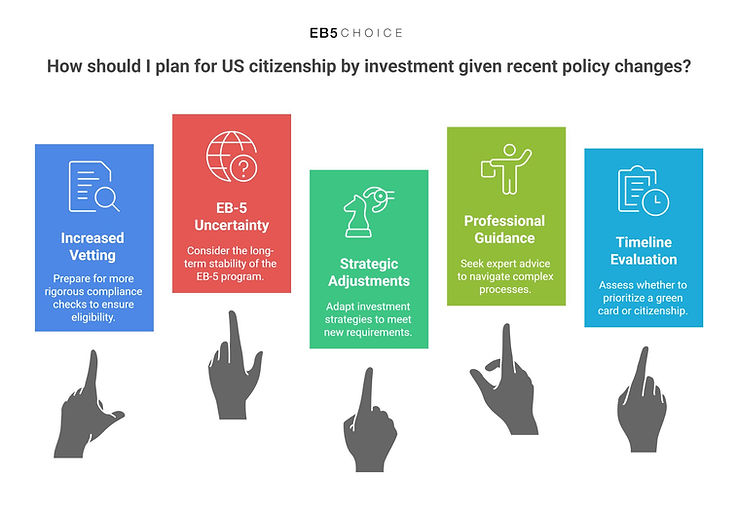
- Increased Vetting and Compliance Requirements
The EB-5 program is already known for its strict documentation demands, but applicants should anticipate even more rigorous vetting in the coming months. This could be especially true for investors with ties to high-risk regions, politically sensitive industries, or complex financial histories.
Expect deeper forensic-style audits of your source of funds, more granular tracking of international bank transfers, and requests for additional evidence. Processing timelines could also lengthen as USCIS allocates more time for due diligence.
The smartest move now is to prepare comprehensive, well-organized documentation far in advance and ensure every financial transaction is fully transparent. Even one unresolved inconsistency can trigger months of delay or worse, a denial.
- Uncertainty Over EB-5’s Long-Term Landscape
Legally, the EB-5 program still stands on a strong foundation under the EB-5 Reform and Integrity Act of 2022, but new legislative proposals, such as the much-discussed “Gold Card” concept, hint that the investment immigration landscape could evolve in both structure and requirements.
If Congress chooses to reform or expand investor visa options, it could change everything from minimum investment thresholds to priority processing rules. For investors, this creates a planning dilemma: commit now under current rules or wait and risk missing out if the door narrows. The key is to follow congressional discussions, USCIS updates, and credible immigration law commentary closely.
- Potential Strategic Adjustments
If EB-5 rules tighten, wait times increase, or visa allocations shift, investors may need to rethink their approach. This could mean diversifying immigration strategies by exploring other U.S. visa options, such as the E-2 treaty investor visa, or even parallel programs in countries like Portugal or Canada.
Within EB-5 itself, weighing the pros and cons of regional center versus direct investment will become even more critical. Regional centers often offer less operational involvement but carry less project risks, while direct investments demand more hands-on oversight but may provide greater control over job creation metrics.
- Importance of Professional Guidance
Navigating an EB-5 petition in a shifting policy climate is not a do-it-yourself exercise. An experienced EB-5 investment advisor can help you interpret regulatory changes, select projects with solid compliance records, and structure your documentation to withstand heightened scrutiny.
Advisors can also spot weaknesses, such as unrealistic job creation forecasts or overreliance on EB-5 capital, that could otherwise lead to costly setbacks. In today’s environment, professional guidance is not a luxury, it’s a risk management necessity.
- Evaluating Your Timeline: Green Card vs. Citizenship
For some investors, the goal is straightforward: obtain a US green card by investment and begin life in the U.S. For others, the ultimate aim is full U.S. citizenship. With potential policy changes that could extend naturalization timelines, it’s worth evaluating whether your current path still aligns with your long-term objectives.
Strategic planning now could help you avoid unnecessary delays later, whether that means accelerating your application or exploring alternative residency options to bridge the gap.
In short, staying proactive, well-informed, and professionally advised will be the difference between seizing an opportunity and missing it.
Who Is Affected Most
These policy changes will not impact all stakeholders equally. Each group faces its own challenges, and opportunities, depending on where they are in the investment immigration process.
1. Prospective EB-5 Applicants
For individuals still weighing the decision to apply, increased vetting standards and uncertainty about long-term program stability could cause hesitation. Stricter source-of-funds scrutiny, longer processing times, and evolving compliance requirements may prompt some to delay their applications or seek alternative programs. Clear, proactive planning will be essential to move forward confidently.
2. Current EB-5 Applicants
If you’re already in the EB-5 pipeline, you may face uncertainty around approval timelines due to heightened review procedures or shifting priorities at USCIS. The good news is that statutory protections under the EB-5 Reform and Integrity Act (RIA) provide a level of program stability, ensuring your application is not nullified by sudden legislative changes.
3. High-Net-Worth Applicants Without Job Creation Intentions
Wealthy individuals who wish to immigrate without actively creating U.S. jobs may find the proposed “Gold Card” idea appealing. However, its lack of legal clarity, undefined requirements, and absence of established processing protocols make it a risky, untested option.
4. Regional Centers and EB-5 Advisors
Organizations facilitating EB-5 investments, whether as regional centers,
EB-5 investment advisors, or migration agencies, must remain agile. Evolving compliance standards, investor questions, and potential competition from alternative immigration options mean these entities must stay informed, adapt marketing strategies, and prioritize client confidence through transparent communication.
What You Can Do Now
If you’re considering securing U.S. citizenship through investment, preparation and adaptability are key in today’s evolving immigration landscape. Proactive steps can help safeguard your plans and position you for success despite shifting policies.
Consult a Qualified EB-5 Investment Advisor
A qualified EB-5 investment advisor can do far more than simply introduce projects, they act as your intelligence source and strategic partner. They can monitor real-time USCIS announcements, interpret regulatory changes, advise on the safest project structures, and help you understand the financial and immigration risks unique to your profile.
An advisor with a proven track record can also connect you with credible EB-5 regional centers, legal counsel, and due diligence resources, ensuring every move is based on verified data rather than speculation.
Maintain Comprehensive, Transparent Documentation
USCIS scrutiny is likely to intensify, particularly regarding source-of-funds verification, lawful path of investment capital, and personal background checks. Start preparing now by gathering detailed banking records, tax returns, business ownership proof, and transaction histories going back multiple years.
Organize them in a clear, chronological manner. Transparency will not only reduce delays but also help your legal team respond quickly to any Requests for Evidence (RFEs).
Monitor Legislative and Policy Developments
Congressional action is one of the biggest variables in EB-5 stability. Legislative protections, visa number allocations, and reforms under the EB-5 Reform and Integrity Act (RIA) can all shift the program’s attractiveness.
Subscribe to official USCIS alerts, follow reputable immigration law firms’ policy updates, and attend webinars where immigration experts dissect changes. Even a single amendment to processing rules or visa allocations can impact your timeline.
Align Your Timeline With Program Realities
Your investment strategy should align with the realities of visa availability, country-specific retrogression, and the time USCIS will take to process your petition. If you are from a country with high EB-5 demand, such as China, India, or Vietnam, you’ll need to account for possible waiting periods before visa issuance.
In contrast, rural or high-priority TEA projects may allow for faster processing. Adjusting your expectations and financial planning around these timelines can reduce stress and keep you strategically positioned.
Final Thoughts
The pursuit of becoming a US citizen by investment in 2025 demands both optimism and preparation. The longstanding EB‑5 pathway offers a familiar route, backed by law through 2027, but recent policy shifts, most notably the Gold Card proposal and tightened vetting, introduce complexity.
By staying informed, working with trusted advisors, and remaining adaptable, you can navigate these changing waters.