


Investors exploring pathways to secure a U.S. green card by investment often encounter the term EB-5 infrastructure projects as a key opportunity. These projects, centered around essential public facilities and systems like transportation, utilities, and social infrastructure, offer a unique blend of stability, job creation, and regulatory compliance that appeals to EB-5 investors.
What Defines an EB-5 Infrastructure Project?
Why Investors Choose EB-5 Infrastructure Projects
Infrastructure projects provide essential services that have ongoing demand regardless of economic cycles, offering a relatively lower risk compared to commercial real estate ventures.
Job Creation: Because infrastructure projects are labor-intensive and require long-term maintenance, they tend to generate substantial direct and indirect employment, fulfilling USCIS’s job creation criteria.
Government Support: Many infrastructure projects receive public backing, grants, or contracts, enhancing project credibility and financial security.

Regulatory Framework & USCIS Requirements
Types & Examples of EB-5 Infrastructure Projects
Transportation: These projects enhance regional connectivity and include highway expansions, bridge repairs, and rail system upgrades. They improve mobility, reduce congestion, and often involve government partnerships. Such projects create substantial construction and operational jobs, aligning well with EB-5 job creation goals.
Utilities: Utilities projects ensure delivery of water, electricity, and energy. Examples include water treatment plants, renewable energy installations like solar and wind farms, and power grid modernization. These projects are vital for public health and sustainability, offering long-term, stable employment opportunities
Social Infrastructure: This category includes hospitals, schools, and broadband internet expansion. These projects improve quality of life by enhancing healthcare, education, and digital connectivity, especially in underserved areas. They often involve cooperation with local governments and generate jobs during construction and operation.
Environmental Projects: Environmental infrastructure focuses on waste management systems, flood control measures, and water conservation efforts. These projects promote sustainability, resilience, and public safety, requiring coordination with environmental agencies.
Each type supports public welfare and typically involves complex coordination between private investors, government entities, and construction firms.
Risk Assessment and Due Diligence
Construction Risks:
Delays: Unexpected setbacks such as weather issues, supply chain disruptions, or labor shortages can push back completion timelines, potentially affecting cash flow and job creation schedules.
Cost Overruns: Initial budgets may prove insufficient due to material price increases, unforeseen technical challenges, or changes in project scope.
Contractor Performance: Problems with contractor reliability or workmanship can result in rework, quality issues, and disputes, all of which can delay the project or increase expenses.
Mitigating construction risks involves vetting experienced contractors, including performance bonds, and maintaining clear project management protocols.
Operational Risks:
Performance Challenges: Facilities may face issues such as equipment failures, lower-than-expected capacity utilization, or maintenance backlogs.
Maintenance Costs: Ongoing maintenance is crucial to ensuring longevity and compliance with safety standards, but costs can escalate if not properly managed.
Revenue Stability: Projects relying on user fees or government payments may encounter fluctuations due to policy changes, economic conditions, or competition.

Regulatory Risks:
Local Laws: Zoning, permitting, and land use regulations can impact project timelines and costs.
Environmental Regulations: Compliance with environmental impact assessments, pollution controls, and conservation laws is mandatory and can affect project design and approvals.
USCIS Requirements: For EB-5 investors, projects must meet strict criteria regarding job creation, regional center certification, and investment documentation. Failure to comply can jeopardize visa approvals.
Thorough legal review and consultation with immigration and environmental experts are critical to managing regulatory risks.
Financial Risks:
Refinancing Dependence: Many projects rely on refinancing construction loans into long-term debt. Market conditions or credit issues can complicate refinancing efforts.
Revenue Projections: Overly optimistic assumptions about user demand, government subsidies, or operational income can lead to cash flow shortfalls.
Capital Structure: The mix of debt and equity influences risk exposure. Investors must understand their position in the repayment priority and the implications for return and safety.
Financial due diligence includes analyzing cash flow models, debt service coverage ratios, and stress-testing revenue assumptions. A thorough due diligence process includes reviewing project feasibility, legal frameworks, financial models, and job creation reports.
Want to understand broader program challenges? Read our guide on Common EB-5 Investment Risks
Financial Structures & Capital Stack
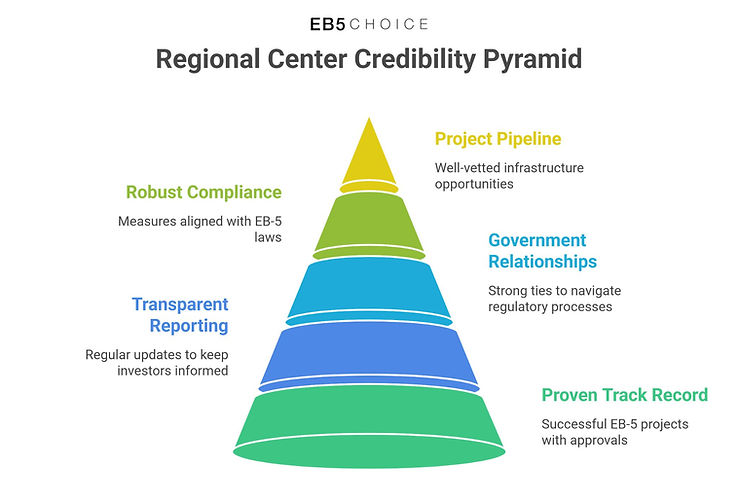
Role of Regional Centers and Qualifications for EB-5 Infrastructure Projects
A proven track record of successful EB-5 projects with documented petition approvals.
Transparent reporting and regular updates to keep investors informed.
Strong relationships with government agencies to help navigate regulatory processes.
Robust compliance measures aligned with EB-5 laws, including anti-fraud and investor protections.
A well-vetted pipeline of projects, including infrastructure opportunities.
Investors should carefully evaluate a regional center’s history, project quality, transparency, and compliance before investing. Consulting with experienced immigration and financial professionals can help validate the center’s credibility and project viability.
In essence, regional centers simplify complex infrastructure investments, making them accessible and compliant EB-5 options for investors.
Positioning Infrastructure Among the Best EB5 Projects
Unlike some real estate ventures, which can be speculative and sensitive to market fluctuations, infrastructure projects are typically grounded in tangible demand for essential services, such as transportation, utilities, and social facilities, and often benefit from government support or contracts.
The nature of infrastructure projects means they usually have steady cash flows and a lower risk profile, making them attractive to investors who prioritize security alongside their immigration objectives. Additionally, because these projects create a broad range of direct and indirect jobs, they align well with USCIS requirements, reducing the risk of visa petition denials.
For investors seeking lower-risk, socially impactful investments that also provide a clear pathway to permanent residency, EB-5 infrastructure projects offer a compelling opportunity that balances financial prudence with meaningful economic contribution.
How EB-5 Infrastructure Projects Support US Green Card by Investment
The Role of an EB-5 Broker Dealer in Facilitating Infrastructure Investments
Future Trends in EB-5 Infrastructure Projects
Focus on Green and Sustainable Infrastructure
Expansion of Digital Infrastructure
Increased Use of Public-Private Partnerships (PPP)
Enhanced Regulatory Oversight
Conclusion